India
One Nation, One Election Set in Motion as Government Finalizes Implementation Plan
May 31, 2026 Source: Indivox News
The Central Government has begun preparing a detailed roadmap to implement the ambitious “One Nation, One Election” policy, which aims to conduct Lok Sabha and State Assembly elections simultaneously across India. According to sources associated with the Joint Parliamentary Committee (JPC) overseeing the proposal, the government is considering a gradual two-phase transition instead of immediately bringing all states under a single election cycle.
Under the proposed plan, the first phase could begin in 2029, when Assembly elections in around 20 states may be held alongside the Lok Sabha elections. The second phase is expected to be completed by 2034, ultimately bringing the entire country under a common electoral schedule.
The government is reportedly exploring this phased approach to avoid frequent elections, prevent the need to significantly shorten or extend the tenure of state assemblies, and ensure a smoother transition. The term of the Joint Parliamentary Committee has already been extended until the Monsoon Session of 2026, giving members additional time to finalize recommendations and implementation strategies.
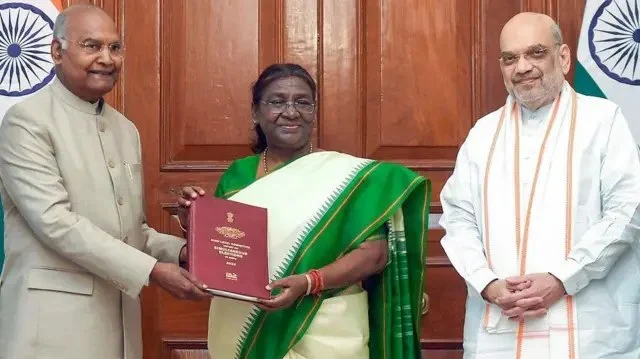
The idea of simultaneous elections has been under discussion for several years. To examine the feasibility of the proposal, a high-level committee chaired by former President Ram Nath Kovind was established on September 2, 2023. After conducting extensive consultations with political parties, constitutional experts, election officials, and other stakeholders, the committee submitted its report to President Droupadi Murmu on March 14. The report was prepared after 191 days of research and deliberations.
Supporters of the policy argue that holding elections together would reduce election-related expenditure, minimize disruptions caused by the Model Code of Conduct, and allow governments to focus more on governance and development rather than continuous campaigning.
India has previously experienced simultaneous elections. Between 1952 and 1967, Lok Sabha and most State Assembly elections were conducted together on four occasions. However, the system began to break down after 1967 as several state governments collapsed before completing their terms. During 1968 and 1969, multiple state assemblies were dissolved, and in 1970 the Lok Sabha itself was dissolved ahead of schedule.
As a result, mid-term Lok Sabha elections were held in 1971, and state elections gradually began taking place at different times. Over the decades, coalition politics, President’s Rule in various states, and early dissolutions further widened the gap between election schedules.
Several institutions, including the Law Commission of India and NITI Aayog, have repeatedly recommended exploring ways to synchronize election cycles. If the government moves forward with the proposed plan, 2029 could mark the beginning of one of the biggest electoral reforms in independent India, with the goal of achieving complete electoral synchronization by 2034.