
World
Japan reveals new name for 40C-and-hotter days after blistering summer
April 17, 2026 International Source: BBC World
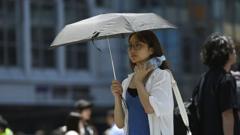
The term - kokushobi - translates to "cruelly hot", "brutally hot" or "severely hot", and comes after Japan's hottest summer on record.
Japan reveals new name for 40C-and-hotter days after blistering summer
Copyright current_year BBC. All rights reserved. The BBC is not responsible for the content of external sites. Read about our approach to external linking.
Copyright current_year BBC. All rights reserved. The BBC is not responsible for the content of external sites.
Read about our approach to external linking.
A woman walking on the street shields herself with a parasol on June 17, 2025, in Tokyo, Japan.
Japan has unveiled a new name for days that reach 40C (104F) or above, after the country experienced its hottest summer on record last year.
The term - kokushobi - has been translated as "cruelly hot", "brutally hot" or "severely hot" day by Japanese and international media.
The name emerged as the most popular in a national online survey, with "super extremely hot day" in second place.
Extreme weather events like heatwaves are becoming more common and more intense around the world, fuelled by human activities such as the burning of fossil fuels.
Two firefighters dressed in yellow and black protective clothing watch on as a bright orange fire blazes among some branches.
How climate change worsens heatwaves, droughts, wildfires and floods
A woman in an orange dress stands in the doorway of her flooded house on the outskirts of the city of Gonaives in Haiti. The water level is at waist height. The walls of the house are substantially damaged.
The description, introduced by Japan's Meteorological Agency (JMA) on Friday, uses koku - meaning harsh or cruel - to describe the heat, the Japan Times newspaper reported.
The survey was conducted in February and March and received roughly 478,000 responses, in which people picked their preferred term among 13 options to describe the hottest day.
Japan already has terms for days over 25C, 30C and 35C.
The new word for even hotter weather comes after record-shattering heat hit Japan last year.
Summer 2025 was the hottest since records began in 1898 - with average temperatures nationwide 2.36C above average.
Temperatures reached 40C-plus on nine days between June and August, with a new national peak of 41.8C in the city of Isesaki.
The cumulative number of extremely hot days also surpassed the previous record set in 2024.
For example, Tokyo recorded 25 days over 35C, compared with an average of just 4.5 days. Kyoto logged 52 days above the same temperature, compared with an average of 18.5 days.
This summer, JMA forecasts a high probability of above-normal temperatures in Japan from June to August.
Two girls with long black hair holding mini fans to their faces as they stand on a road.
From heatwaves to floods: Extreme weather sweeps across Asia
A woman in a red and black vest top, beige shorts and sandals stands on a dried-up river bed. There is a forest in the background.
What are El Niño and La Niña, and how do they change the weather?
The aid is roughly equivalent to a year's worth of crude oil imports by Asean countries.
Hard rock enthusiast Sanae Takaichi beamed as she met the rockers in her Tokyo office.
The final six nations have qualified for the 2026 World Cup - this is your essential lowdown on the expanded edition of the tournament.