
World
Snack giant switches to black and white packaging as Iran war hits ink supplies
May 12, 2026 International Source: BBC World
The effective closure of the Strait of Hormuz has severely disrupted global supplies of energy and petrochemicals.
Snack giant Calbee switches to black and white packaging as Iran war hits ink supplies
Copyright current_year BBC. All rights reserved. The BBC is not responsible for the content of external sites. Read about our approach to external linking.
Copyright current_year BBC. All rights reserved. The BBC is not responsible for the content of external sites.
Read about our approach to external linking.
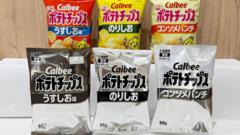
Shelves lined with packs of Calbee crisps, including the company's new black-and-white packaging.
Snack giant switches to black and white packaging as Iran war hits ink supplies
Japanese snack giant Calbee says it will temporarily switch to black and white packaging for some of its best-known products as supplies of an ingredient used in ink have been disrupted by the Iran war.
The firm says new-style packets for 14 of its products, including crisps and prawn crackers, will start to appear in shops in Japan from 25 May.
It marks the latest example of how everyday goods are being impacted after Iran effectively closed the key Strait of Hormuz waterway in retaliation for US and Israeli strikes on the country.
It marks the latest example of how everyday goods are being impacted after Iran effectively closed the
in retaliation for US and Israeli strikes on the country.
In recent weeks, companies around the world have warned that supply disruptions to things like fuel, plastics and helium are pushing up costs for their businesses.
Calbee said in a statement that the design change is a response to "supply instability affecting raw materials amid ongoing tensions in the Middle East."
that the design change is a response to "supply instability affecting raw materials amid ongoing tensions in the Middle East."
"This measure is intended to help maintain a stable supply of products," said Calbee.
Oil and gas prices have surged since the conflict started on 28 February as shipments through the Strait of Hormuz halted.
Supplies of naphtha, a byproduct of oil refining used in ink and plastics, have also been hit hard.
Naphtha prices in Asia have almost doubled since the conflict started, pushing up costs for businesses in the region.
Before the war, around 40% of Japan's naphtha was imported from the Middle East, Japan's deputy chief cabinet secretary Kei Sato told reporters on Tuesday.
The government was working to "stabilise and resolve any supply imbalances and bottlenecks", he added.
In April, Japanese Prime Minister Sanae Takaichi said the country was broadening its supply of naphtha to include more sources outside the Middle East, such as the US.
A boy stands next to an empty LPG cylinder tied to a bicycle as he waits outside a gas agency in India
South Korea to Sri Lanka: How the Iran war impacts you if you live in Asia
Piansomboon has decided to halt farming for now due to rising costs of fertilisers
It's not just oil: Iran war also threatens Asia's food security
Asian countries have been hit particularly hard by disruptions to shipping through the Gulf as they are heavily reliant on the Middle East for energy and other oil-related products.
On 1 May, Japanese foodmaker Mizkan, which makes a popular fermented soybean snack, suspended sales of some of its products and raised prices for others due to a shortage of polystyrene containers.
Meanwhile, car makers like Toyota and Hyundai have said their profits have been hit due to higher costs of materials and lower sales.
Around the world, many airlines have paused flights and grounded some planes after jet fuel prices surged due to the war.
Around the world, many airlines have paused flights and grounded some planes after
Last week, UK-based fashion chain Next raised its prices by up to 8% in some countries outside Europe due to higher fuel prices and disruption to global supply chains.
in some countries outside Europe due to higher fuel prices and disruption to global supply chains.
Kikuo Hatakeyama, 72, has served as the mayor of Hachirogata in north-east Japan since 2008, but fell ill in February.
From lattes to ice-cream, the Japanese tea is popping up more and more on menus across the UK.
Japan's PM is pushing to revise country's pacifist constitution - and it's causing controversy.
David Malpass also said that Beijing's claim to be a developing nation was no longer credible.
The US president criticises an Iranian counteroffer to end the war, and says the month-long ceasefire is "unbelievably weak".
Woodworking shops have been transformed by tech to make tools safer and more precise.
Trump's whirlwind visit to China is the most significant for years - but will it bear fruit?
Investment bank JP Morgan expects oil to remain in the "low $100s" even if the Strait of Hormuz were to reopen next month.